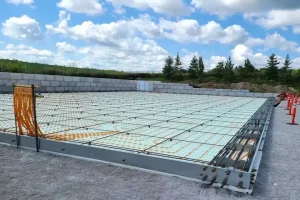
Steel structure safety standards provide the foundation for reliable design, fabrication, erection, and long-term use of steel buildings. They help engineers control dead and imposed loads, wind, earthquakes, fire, buckling, fatigue, weld quality, corrosion, and construction errors before these risks become failures. Compliance is not merely an administrative requirement; it is a systematic method for protecting occupants, improving durability, reducing repair costs, and preventing project disruption. This guide explains ten important European and international standards, identifies the project stage where each applies, and shows why every requirement must be carefully coordinated with local building regulations and the applicable national annex.
Steel Structure Safety Standards
1. EN 1990: Basis of Structural Design and Reliability
EN 1990 establishes the common decision-making framework for structural design and is the starting point for steel structure safety standards. It organizes ultimate and serviceability limit states, design working life, persistent and transient situations, load combinations, partial safety factors, reliability, and the consequences of failure. Before sizing members, the engineer must define how the building will be used, which accidental situations are credible, what performance is required, and how disproportionate collapse will be resisted. On complex developments, construction consulting helps the client and design team establish the consequence class, robustness strategy, independent checking requirements, and assumptions that must remain valid during execution.
EN 1990 does not provide beam or column sizes by itself; it creates the safety logic for the whole project and must be applied together with loading standards, material design codes, and the national annex adopted where the structure will be built.
2. EN 1991: Actions on Structures
EN 1991 classifies the actions that may affect a building and supplies essential input for steel structure safety standards. Self-weight, imposed loads, snow, wind, temperature, impact, accidental actions, crane loads, and construction-stage effects must be represented by suitable models and combined correctly. An error in loading can invalidate the design even when member resistance and connection calculations are otherwise accurate. Differences in mass, stiffness, and dynamic behavior between steel framing and reinforced concrete must also be reflected in seismic mass, deflection, vibration, and second-order effects.
Industrial buildings and warehouses require careful treatment of moving equipment, storage patterns, and concentrated loads, while tall buildings may be governed by wind response and occupant comfort. Final values should be coordinated with the actual occupancy, climatic data, geotechnical report, project geometry, and the national annex applicable to the country of construction.
3. EN 1993 or Eurocode 3: Design of Steel Members and Connections
EN 1993 provides the principal calculation rules within steel structure safety standards and covers resistance, stability, serviceability, durability, and fatigue. Engineers use the series to verify tension, compression, bending, shear, torsion, local and global buckling, lateral-torsional buckling, interaction of forces, and the capacity of bolted and welded connections. Steel grade, toughness, plate thickness, cross-section slenderness, geometric imperfections, residual stresses, and second-order effects can all influence the result. Where a composite system such as an SRC structure is selected, the steel provisions must be coordinated with composite and concrete design rules so that force transfer between the steel core and surrounding concrete is realistic. Eurocode 3 contains separate parts for buildings, bridges, cold-formed members, plated elements, tanks, towers, joints, and fatigue. The designer must therefore identify the relevant parts rather than relying only on the general building rules.
4. EN 1998 or Eurocode 8: Seismic Design
EN 1998 complements steel structure safety standards by aiming to protect life, limit damage, and maintain the operation of structures important to civil protection during earthquakes. Its rules emphasize ductility, regularity in plan and elevation, selection of the lateral-force-resisting system, capacity design, drift control, stability of non-structural components, and connection detailing. In moment frames, concentrically or eccentrically braced frames, and dual systems, intended yielding zones and the force path should be defined in advance so that brittle failure does not occur in columns or connections. For lightweight systems such as an LSF structure, reduced mass may lower seismic demand, but diaphragms, screw connections, straps, cold-formed shear walls, hold-downs, and anchorage to the foundation still require specific verification. Seismic hazard parameters, soil class, importance factors, and detailing requirements must be taken from the official maps, national regulations, and annexes governing the project location.
5. EN 1993-1-2: Structural Fire Design
EN 1993-1-2 addresses steel behavior at elevated temperature and provides the fire-resistance component of steel structure safety standards. As temperature rises, yield strength and elastic modulus decrease, so a member may lose load-bearing capacity or stability long before the steel melts. The designer should evaluate the fire scenario, required resistance period, heating rate, section factor, load level in the accidental fire situation, critical temperature, and the performance of connections. Intumescent coatings, sprayed protection, fire-resistant boards, or encasement can then be selected to achieve the target rating.
Architectural finishes such as a wooden acoustic wall covering must also be reviewed for reaction to fire, clearances from protected steel, concealed cavities, and service penetrations so that the tested fire-protection system is not compromised. The specified solution should include inspection of thickness, continuity, substrate preparation, damage after installation, and maintenance throughout the service life.


6. EN 1090: Fabrication, Erection, and Execution Control
EN 1090 governs the transition from design drawings to fabricated and erected work, making steel structure safety standards verifiable during production and site installation. The series addresses execution classes, geometrical tolerances, cutting, drilling, edge preparation, welding, preloaded bolting, trial assembly, handling, erection, site modifications, material traceability, and quality records. The execution class should reflect the consequences of failure, loading type, and fabrication complexity because it influences inspection and quality-control intensity. In prefabricated products such as a kit house, repetition does not justify relaxing checks on connections, anchors, panel tolerances, lifting points, or installation instructions. For many structural components placed on the European market, conformity assessment and factory production control documentation also carry legal significance. The project team should align the current standard edition, design assumptions, execution specification, inspection plan, contract documents, and national requirements before fabrication begins.
7. ISO 3834: Quality Requirements for Fusion Welding
The ISO 3834 series defines a quality-management framework for fusion welding and supports the production side of steel structure safety standards. Welding is treated as a special process because final quality cannot be assured only by looking at the completed product; controls are needed before, during, and after fabrication. The series covers review of technical requirements, welding coordination, qualified procedures, welder approval, parent and filler materials, equipment maintenance, preheating and heat treatment, identification, inspection, repair, and retention of records. Comprehensive, standard, or elementary quality levels may be selected according to structural significance and project risk.
Effective implementation is not simply a larger set of forms. It should demonstrate that every critical joint was produced using an approved method, suitable equipment, competent personnel, controlled consumables, and evidence traceable to the component. Contract specifications should also identify the applicable supporting standards for procedure qualification, personnel qualification, and inspection.
8. ISO 5817: Quality Levels for Weld Imperfections
ISO 5817 defines measurable acceptance levels for weld imperfections and gives steel structure safety standards a consistent language for evaluating workmanship. It addresses fusion-welded joints in steel and several other metals, classifying conditions such as cracks, porosity, lack of fusion, incomplete penetration, undercut, excessive convexity or concavity, and geometric irregularity. Quality levels B, C, and D represent progressively less stringent requirements, but the selected level must be stated in the drawings or execution specification. The most demanding level is not automatically necessary or economical for every weld; fatigue-sensitive, seismic, dynamically loaded, or otherwise critical connections may justify tighter criteria than secondary components.
ISO 5817 does not replace connection resistance calculations, a welding procedure, or an inspection plan. Instead, it enables test results to be compared with an agreed workmanship threshold and should be coordinated with the structural design code, execution class, chosen non-destructive testing method, and contractual acceptance rules.
9. ISO 17635: Non-Destructive Testing of Welds
ISO 17635 provides general rules for selecting and combining non-destructive testing methods and forms the verification link in steel structure safety standards. Depending on material, thickness, joint type, welding process, quality level, and structural importance, the inspection plan may use visual testing, magnetic-particle testing, penetrant testing, ultrasonic testing, or radiographic testing. Each method has limitations: a surface technique cannot reveal every internal discontinuity, and a higher testing percentage does not automatically improve safety if critical locations are poorly selected. The plan should define the examination extent, timing, testing level, personnel competence, reporting format, acceptance criteria, and procedure for repair and re-examination.
The 2025 edition sets general rules for metallic materials, while the project must also apply the method-specific standards and any national or contractual provisions. Results should remain traceable to the weld number, component, drawing, inspector, equipment, and date so that corrective action can be audited.
10. ISO 12944: Corrosion Protection by Protective Paint Systems
The ISO 12944 series structures the protection of carbon steel by paint systems and supports the durability objectives of steel structure safety standards. The project environment should first be classified for humidity, salt, industrial pollution, immersion, or soil exposure; surface preparation, primer, intermediate coats, finish coat, dry-film thickness, application method, and expected durability can then be specified. Detail design matters as much as paint selection because water traps, sealed crevices, sharp edges, dissimilar-metal contact, and inaccessible zones can shorten coating life. The stated durability range is not a guarantee; it is an expected period to the first major maintenance intervention, so inspection and maintenance planning remain necessary.
Surface cleanliness and profile, ambient temperature and humidity, recoat intervals, thickness of each layer, adhesion where required, and repair of transport or erection damage should be recorded. This documentation confirms that the designed protection was actually achieved on the completed structure.
Why Steel Structure Safety Standards Matter
The importance of steel structure safety standards extends beyond preventing collapse. A coordinated standards strategy improves design decisions, buildability, construction speed, life-cycle cost, insurability, asset value, and maintainability. When loading, calculations, details, materials, welds, bolts, fire protection, coatings, inspection, and handover records are managed as one chain, errors are identified earlier and corrected at lower cost. Neglecting a single link, such as selecting the wrong execution class or omitting corrosion control, can undermine the benefits of otherwise sound engineering. The client should therefore define responsibilities, applicable editions, hold points, independent checks, required records, and acceptance procedures at the start of the contract rather than trying to reconstruct compliance after fabrication or installation has been completed.


Final Words
Steel structure safety standards are not an isolated checklist; they form a connected system from reliability and loading through design, fabrication, welding, erection, protection, inspection, and maintenance. A safe project uses EN 1990, EN 1991, EN 1993, EN 1998, EN 1090, and the relevant ISO standards in combinations suited to the building type and actual site conditions. The enforceable edition, national annex, fire and seismic regulations, product rules, and permitting requirements may differ by jurisdiction. Final calculations, execution specifications, and inspection plans should therefore be reviewed by appropriately qualified professionals against the latest local requirements before construction begins.
At Ohaddeco, we specialize in designing and implementing various types of LSF structures, various types of wooden acoustic wall coverings, and various types of thermowalls. For more information or to place an order, simply contact us.