TV wall decor works best when it suits the room’s dimensions, seating and surrounding furniture. A painted wall with a simple console may suit your home better than stone and concealed lighting. Before buying materials, decide whether this area will simply hold the screen or also provide storage. This guide examines finishes, color, lighting and installation details to help you develop a practical design within your budget.
Start with the Television Position
Establish the seating arrangement before choosing the wall’s appearance. The screen should be comfortable to watch from the main seats, without distracting window reflections. Mark its outline on the wall with masking tape and check the position from your sofa before installation. This simple check lets you assess the proposed arrangement in the actual room before committing to a decorative finish.
When planning TV wall decor, choose the viewing distance and mounting height according to screen size and seating position. One fixed measurement will not suit every home. Coordinating this wall with your interior design does not require repeating every finish; matching the coffee table’s wood tone may provide enough connection.
TV Wall Decor with Paint and Wallpaper
If the wall is smooth and sound, painting offers a straightforward starting point. Matte shades such as ivory, beige, warm gray or soft green create a quiet background. Darker colors can also work, but test samples in daylight and evening light before committing.
Wallpaper with a subtle texture suits anyone wanting a restrained surface with some detail. Large, contrasting patterns may compete with moving images on the screen. For a manageable living room decor update, covering this single wall is often enough; changing every wall is unnecessary.
Wood and Slatted Panels for Warmth
Solid wood, veneer and wood-effect MDF differ in appearance and cost. Compare physical samples with the flooring and furniture before ordering, because photographs do not always represent the finished product accurately. Vertical lines can also draw attention toward the wall’s height.
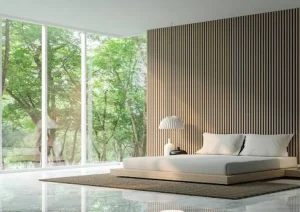
For balanced TV wall decor, combine a limited area of wood acoustic wall panels with a plain surface. If reducing sound reflections matters, examine the product specifications and installation method; slatted panels do not all offer equivalent acoustic performance. Consider groove depth and household dust when assessing cleaning requirements.
Stone and Porcelain with Restrained P
atterns
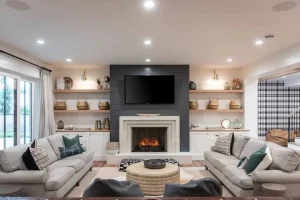
Natural stone or stone-effect porcelain can suit a feature wall, especially when surrounding surfaces are quiet. Dense veining beside patterned rugs and upholstery can make the composition feel busy. Request a proposed slab or tile layout to check joints and vein directions before installation. Assess the pattern as a complete composition, including the sections visible around the screen rather than only the material sample.
When using these materials for TV wall decor, coordinate the supporting structure and bracket fixing points from the start. Decorative cladding alone is not a reliable basis for supporting the television’s weight. In formal living room decor, a limited stone section and simple console may be sufficient; an extensively patterned wall is optional.
Plasterboard and Recessed Designs
Plasterboard allows you to create frames, recesses and concealed cable routes. However, multiple frames and projecting structures do not suit every room. Decide whether each addition serves a purpose or merely occupies useful space. A shallow frame usually adapts more easily when furnishings change.
If your TV wall decor includes a recess, allow ventilation and access to connections according to the television manufacturer’s instructions. Avoid dimensions that unnecessarily complicate replacing the screen later. Include a removable section where necessary so cables and equipment remain accessible for maintenance.
Practical Designs for Small Rooms
In a small room, the structure’s depth matters as much as its appearance. A narrow console, enclosed drawers and a continuous finish generally interfere less with circulation. If you already have sufficient storage, large bookcases on both sides of the screen may be unnecessary. Removing unused shelves can produce a tidier result.
Keep the material palette limited when planning TV wall decor for a compact space. Light paint with a small section of wood acoustic wall panels adds variety without covering everything. In small-space living room decor, organizing cables and choosing a console proportionate to the wall can achieve more than additional ornaments.
Gentle and Adjustable Lighting
Concealed lighting works well when the source stays out of direct view and creates no distracting screen reflections. Choose adjustable brightness so the lighting can suit both films and everyday use. Test the proposed strip position after dark before fixing it permanently.
Multiple colored lights in TV wall decor can pull attention away from the picture. For everyday viewing, gentle, even illumination offers a quieter option. If the installation belongs to your bedroom decor, independent lighting controls are especially useful, allowing you to switch it off without turning on the main light.
Coordinate the Console and Accessories
The console should accommodate existing equipment without obstructing sockets. A floating model exposes more floor but needs suitable fixings. A freestanding unit is easier to move and may be more practical in rented accommodation. Leave airflow around connected devices rather than tightly enclosing them.
For formal living room decor, choose vases and accessories low enough to avoid obscuring the screen. In a private room, matching the console with the wardrobe and bed helps integrate the bedroom decor. A few differently sized objects are generally easier to arrange than a crowded collection of frames and sculptures.
Manage the Installation Budget
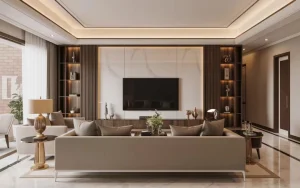
The cost of TV wall decor includes more than the finish itself. Wall preparation, supporting work, transport, installation and socket relocation can all affect the total. Compare quotations for precisely the same scope. A lower figure that excludes final painting or installation does not provide a fair comparison.
With a limited budget, address functional problems before decorative additions. Concealing cables, repainting and choosing an appropriate console can form the first stage. Within your wider interior design plan, prioritize details that improve daily use. Combining every appealing idea will not necessarily create a more coherent result.
Before commissioning TV wall decor, ask the installer to specify finishes, component thicknesses, hardware and completion stages in writing. Discuss repairing fixing holes and replacing damaged sections too. These details matter when maintaining the installation or rearranging furniture, and help you assess the proposal beyond its reference photographs.
Choose a Design That Suits Your Home
To choose TV wall decor, photograph the wall, record its dimensions and compare two or three feasible designs. Examine material samples in the room, then establish cable routes, equipment positions and cleaning access before ordering. The finished arrangement should feel connected to the room when the television is off and provide a calm, practical background when you watch. Thank you for staying with Ohaddeco until the end of this article.