False ceiling is one of the important elements in interior design, which, in addition to their aesthetic aspect, also have a practical and technical role in various spaces. This type of ceiling has been used in modern construction for many years to improve the visual and functional quality of environments. False ceilings help create a clean and orderly appearance in the space by covering installations, pipes, and wiring. They also allow for the installation of beautiful and different lighting. In fact, false ceilings have gained a special place as one of the important technologies in the architectural industry and have been welcomed by interior designers due to their high flexibility in design. Stay with us for more information.
What is a false ceiling?
A false ceiling is a type of decorative covering that is installed at a standard distance from the main ceiling of a building. In addition to being beautiful, this structure helps improve the acoustic and thermal performance of the space. Various materials such as plaster, aluminum, PVC and wood are used to make it. False ceilings are used in places such as homes, offices, commercial centers and hotels, and different designs and materials are chosen depending on the type of space and the taste of the people.
Types of false ceiling
The variety in materials and installation methods presents designers and contractors with a wide range of false ceilings, each selected to suit the specific needs of the project, whether aesthetics, moisture resistance, or the need for frequent access to facilities.
Lattice false ceiling
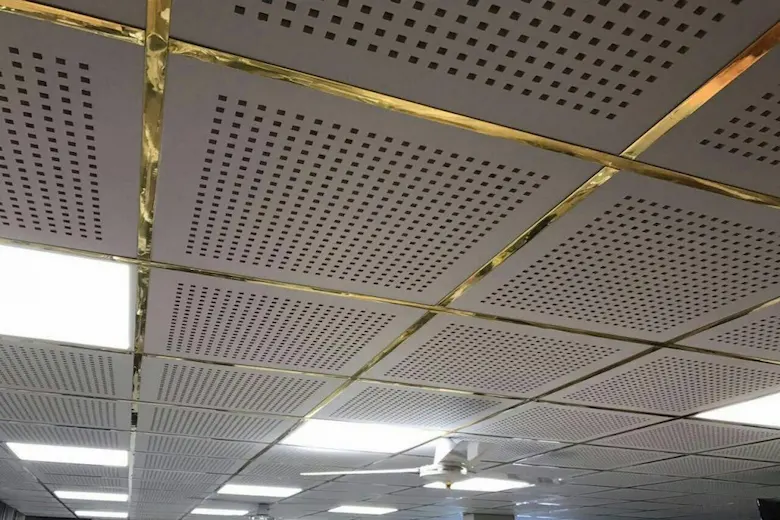
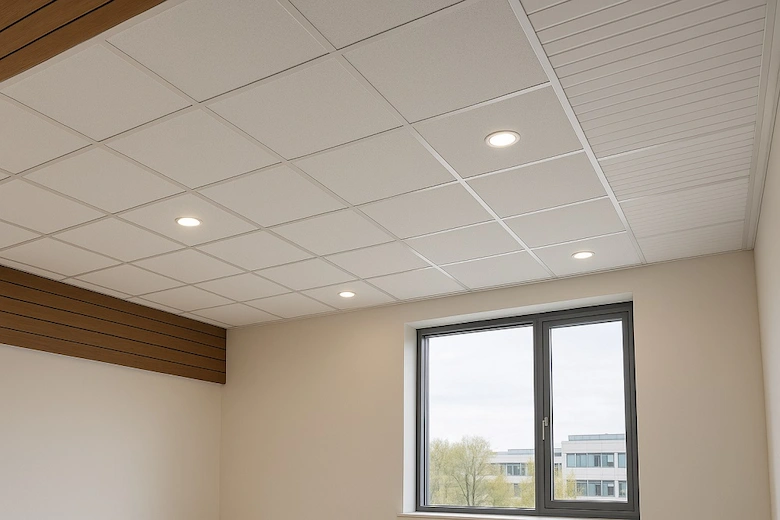
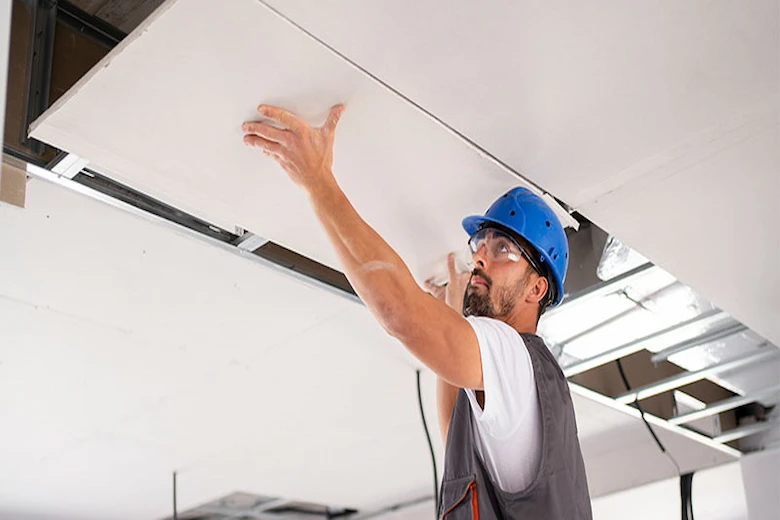
A mesh ceiling, often seen in office, commercial, and public spaces, is a system in which tiles are held in a grid by metal profiles. This type of ceiling is very popular due to its ease of installation and very high accessibility to the space behind the ceiling. If you need to periodically inspect the cooling and heating systems or fire alarm sensors, the tiles of this ceiling can be easily moved without damaging the entire structure. This system is especially suitable for spaces that require quick adaptation. Also, in environments that require strong sound insulation, acoustic tiles are used in this grid.
Integrated false ceiling
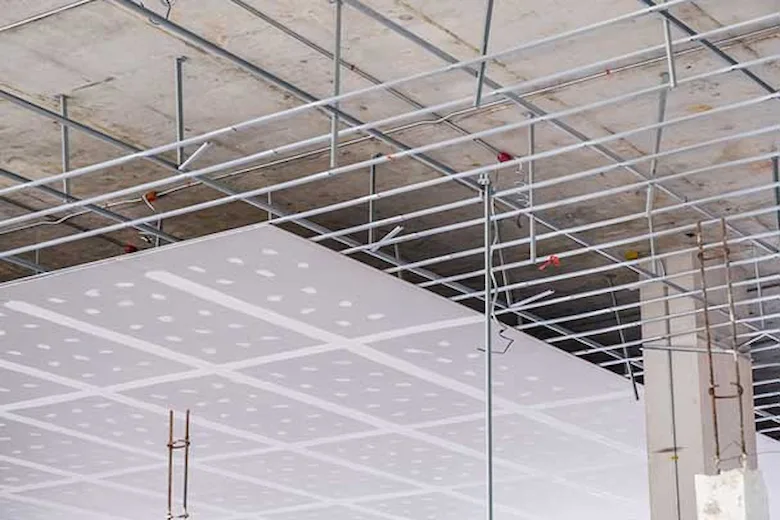
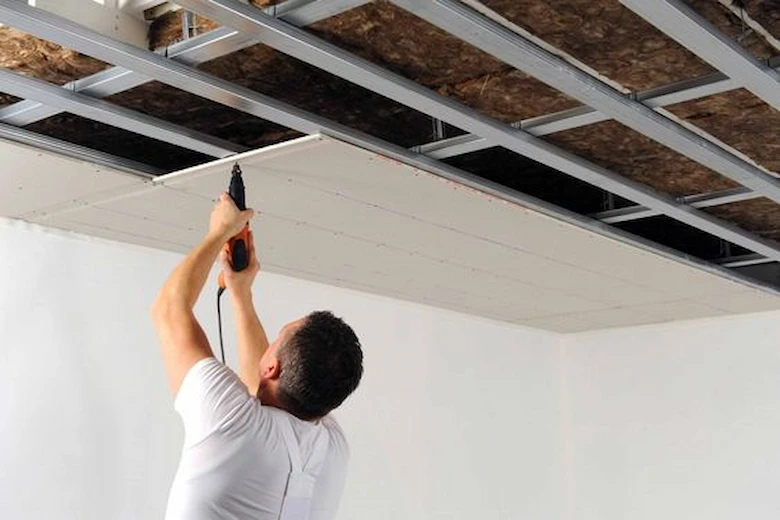
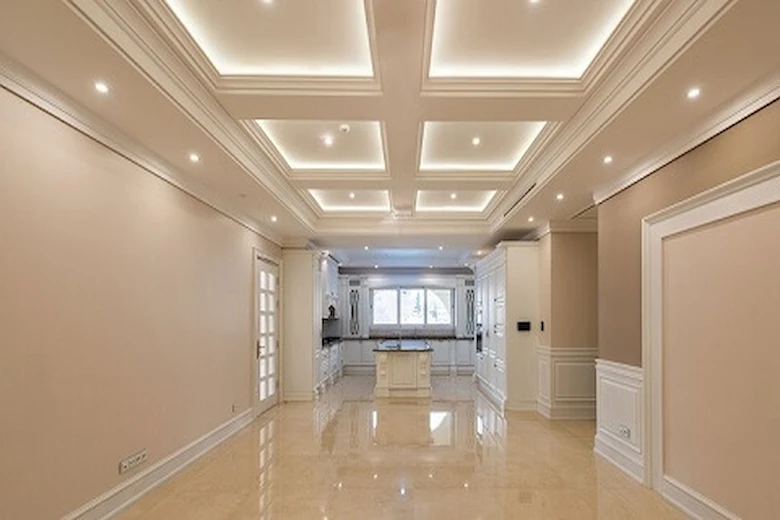
A monolithic false ceiling, more commonly known as a Knauf or Ketch ceiling, is made of gypsum panels that are installed on a metal grid, sealed and puttyed to create a completely smooth and seamless surface. This type of false ceiling allows for the implementation of very complex and curved designs and is the best option for achieving a luxurious and continuous look. These ceilings are an excellent base for concealed decorative lighting (linear lighting or recessed halogens).
Rabitz and plaster false ceiling
This is the oldest form of suspended ceiling construction, in which a network of metal mesh (rabbets) is first attached to the main ceiling and then plaster is applied over it. This method is suitable for creating ceilings of desired shapes and performing heavy remote work, but it requires more skilled labor and time to implement, and its surface is more difficult to finish than the prefabricated plaster panels that modern companies such as Kit House use in their designs today. However, for restoration projects or spaces requiring very specific details, suspended ceilings with rabbets and plaster are still used.
Roll plastic false ceiling
PVC false ceilings consist of lightweight plastic tiles or panels that are simply installed in metal frames. The main advantage of this type of false ceiling is its excellent resistance to moisture and steam, which is why it is widely used in bathrooms, kitchens and toilets. They are also very easy to clean and maintain, and at the same time they are reasonably priced.
Aluminum false ceiling
This type of ceiling is made of aluminum plates and has excellent resistance to moisture and heat. It is usually used in commercial and industrial spaces. Aluminum ceilings are popular due to their light weight, easy installation and high durability. There are various designs available on the market that allow them to be coordinated with any type of layout. Especially in modern spaces, installing aluminum ceilings gives a professional look to the environment and is usually compatible with LSF structure systems.
Wooden false ceiling
Wooden ceilings, whether in the form of tiles or interlocking timbers, bring warmth and a sense of naturalness to a space. This type of ceiling is more aesthetic and is used in spaces such as restaurants, lobbies, and residential spaces that seek to create a warm and intimate atmosphere. To increase the acoustic efficiency of these systems, wooden acoustic wall covering can be used in combination with them to maximize sound absorption, which is especially important in living room decoration.
What are the benefits of a false ceiling?
Choosing the right system for a suspended ceiling brings numerous technical and aesthetic benefits that go beyond simply covering the main ceiling and affect the overall performance of the building.
Advanced sound insulation
One of the most important advantages of using a false ceiling is its ability to reduce sound transmission between floors or adjacent rooms. By choosing sound-absorbing materials (such as mineral acoustic tiles or rock wool) in the empty space between the main ceiling and the false ceiling, a quiet and peaceful environment can be ensured. This feature is especially crucial in high-traffic environments or homes that are in close proximity to each other. This capability significantly improves the quality of life of the residents and provides peace for activities such as studying or working.
Facility management and access
As mentioned, the space created by the false ceiling allows engineers to install all pipes, wiring, ventilation ducts, and fire alarm systems in a neat and hidden manner. In the event of any problems or maintenance needs, access to these installations is easily possible without the need to destroy the main ceiling and by removing a few tiles (in lattice systems). This flexibility reduces the long-term maintenance costs of the building.
Improving thermal insulation and energy saving
The air layer or insulating material placed in the space between two roofs acts as a thermal barrier. This insulation helps to reduce heat loss in the summer and cold loss in the winter. As a result, the building’s heating and cooling systems operate more efficiently and energy consumption is significantly reduced. This positive effect quickly pays for itself, especially in areas with extreme temperature fluctuations.
Aesthetics and flexibility in design
Suspended ceilings allow architects complete control over the height, form, and final appearance of a space. These systems offer unparalleled flexibility, from simple, minimalist designs to complex designs with recessed and decorative lighting. For example, a modern kitchen design requires the implementation of concealed lighting, which can only be implemented with a suspended ceiling or a coffered ceiling. This design option plays a significant role in creating a unique space that matches the client’s taste.
Moisture control and waterproofing
Choosing the right materials, such as PVC ceilings or cement panels, is a vital advantage in wet areas such as swimming pools or bathrooms. These materials are resistant to moisture and prevent damage to the main structure of the building, while maintaining the beauty of the surface. This feature ensures the safety and durability of the structure in harsh environmental conditions.
Possibility of various lighting
The false ceiling has the ability to install a variety of lighting systems, which can use halogens, recessed lights, and LED strips to create special lighting effects. In this way, a dynamic and pleasant space is formed that has a significant impact on the design of the reception decoration. Linear lights, halogens, and LED strings can also be installed in a way that the light shines indirectly and softly into the space. This technique not only provides ambient lighting, but is also a strong decorative element that affects the overall mood of the space, such as a relaxing bedroom decoration design.
Improved fire resistance
Many of the panels used in suspended ceilings, particularly mineral and gypsum tiles, have fire retardant properties. These materials slow the spread of fire in the event of a fire, allowing time for occupants to safely evacuate. This level of safety is an essential requirement, especially in large commercial and office buildings.
Final Words
As discussed in detail in this article, a suspended ceiling is more than just a covering element. It is an engineered system that performs critical functions in the areas of utilities, safety, and aesthetics of the space. From the flexibility of mesh systems for quick access to utilities to the unique beauty of integrated ceilings that create a modern space, each type of suspended ceiling offers a solution tailored to the specific needs of the project. Attention to detail in the selection of the type, material, and lighting of these ceilings not only transforms the visual appearance of the environment, but also has a direct impact on energy efficiency and the comfort of the occupants.
At Ohaddeco, we specialize in the design and implementation of various types of wooden acoustic wall covering, wooden thermowall, and various types of LSF structure. For more information, just contact us.